
Last month, a dental practice we work with called us in a panic. Their blog post on teeth cleaning frequency ranked #1 on Google. It showed up in the AI Overview. ChatGPT quoted it word-for-word. Perplexity cited it as a source. Their organic traffic from that keyword? Down significantly year-over-year.
This is happening everywhere. According to SparkToro’s 2024 study, 58.5% of U.S. Google searches end without a single click, and on mobile, that figure reaches 77%. BrightEdge found that CTRs dropped by roughly 30% year over year for queries where AI Overviews appear. Add ChatGPT, Perplexity, and Google’s expanding AI features into the mix, and you’re looking at a fundamental shift in how people consume information online, particularly with the rise of Zero-Click Searches.
Your content is showing up everywhere. Your traffic is going nowhere.
The Reality Nobody Wants to Admit
Featured snippets, AI Overviews, ChatGPT answers, knowledge panels, and local pack results aren’t temporary experiments. They’re the future of search, because they’re better for users. From Google’s perspective, someone searches “what is schema markup.” Google gives them a perfect answer right in the results, which is a win for Google’s core business model.
Understanding the impact of Zero-Click Searches is crucial for businesses aiming to improve their online visibility.
AI search takes it further. When someone asks ChatGPT a question, the entire point is to get an answer without clicking anywhere. No search results page, no blue links, just a response that pulls from the best sources on the web. The user never sees a list of websites. They see an answer.
Trying to reverse this is like trying to bring back the Yellow Pages. But most businesses are responding incorrectly by trying to “reclaim” clicks instead of adapting to where the value actually lies now.
Why Click-Through Rate Is No Longer the Point
As Rand Fishkin of SparkToro has argued, traffic is no longer a useful top-of-funnel metric. For service businesses, consultancies, and anyone whose conversion is a consultation rather than a checkout button, the awareness stage has moved off your website and into AI-generated results. The funnel still exists, but it just starts somewhere different now:
- Zero-click visibility at the top (people see your brand in AI answers and snippets)
- Brand recognition builds through repeated exposure across platforms
- Direct, high-intent branded searches at the bottom (they Google you by name and convert)
The bottom of the funnel hasn’t changed much. What’s changed is how people enter it. If your metrics are still anchored to blog traffic as the primary awareness indicator, you’re measuring the wrong thing because the top of the funnel has shifted.
Become the Source AI Can’t Ignore
Forget trying to trick AI into sending you clicks. Instead, become the source it has to reference.
We worked with a local law firm that wanted to rank for personal injury keywords. The typical playbook would be a comprehensive guide optimized for featured snippets. We did something different. The managing partner spent 30 hours over three months writing deeply personal case studies. Real stories about cases that went sideways, mistakes they learned from, and outcomes nobody expected.
Within four months, ChatGPT started referencing its content by name. Google’s AI Overview cited them as the primary source for several high-value queries. People weren’t finding them through search results anymore. They were seeing the firm’s name in AI responses, searching for the firm directly on Google, and calling.
The strategy wasn’t “get more clicks.” It was “become so authoritative that AI has no choice but to mention you.”
Here’s how you replicate that:
Publish what your competitors won’t. Original case studies with real numbers. Not “we increased traffic by X%” but actual breakdowns of strategy, execution, and lessons learned. Google has explicitly stated that first-hand experience is a ranking signal, and AI Overviews reflect that priority.
Show your credentials. Don’t just say “John Smith, SEO Expert.” Say “John Smith, 15 years managing enterprise SEO for Fortune 500 companies.” Strong author signals contribute to E-E-A-T, which influences how Google’s AI selects sources.
Create proprietary data. Survey your customers. Track industry trends. Publish findings nobody else has. If you’re the only source for specific data, AI has to cite you or skip the information entirely.
Get mentioned beyond your own site. Ahrefs’ study of 75,000 brands found that branded web mentions across third-party sites (blogs, YouTube, Reddit, industry publications) are the single strongest predictor of AI Overview visibility. Guest posts, podcast appearances, and community engagement aren’t just brand building anymore. They’re how you show up in AI answers.
Structure your content for extraction. Clear H2s and H3s that could stand alone as answers. FAQ schema on your informational pages. Comparison tables and definition lists that AI can easily parse and reference.
But this is the critical part: bury your best insights deeper on the page.
Design A Content Strategy For A Zero-Click Search Landscape
Give AI the appetizer. Keep the main course for yourself.
Your surface layer answers the basic question.
“What is local SEO?” gets a clear, concise definition in the first 150 words.
AI extracts it, the user gets their answer, and everyone’s satisfied. But the real value lives deeper: your local SEO audit checklist for specific industries, the neighborhood-targeting strategy you’ve refined over five years, the Google Business Profile tactics that actually move the needle. That content requires visiting your site.
This isn’t clickbait. It’s important to understand that different users need different depths. Someone casually curious deserves a quick answer. Someone who is ready to implement needs to visit your site to access the full playbook. The layered approach serves both and converts the ones who matter.
We tested this with a home services client. Their article on HVAC maintenance costs provides a clear answer in the first section: typical price range, factors that affect pricing, and seasonal considerations.
Below the fold: cost comparisons by system type, regional pricing variations, a maintenance contract calculator, and red flags that mean you’re overpaying. Clear CTA: “Get a free maintenance estimate.”
Traffic to that article declined after AI Overviews launched. But consultation requests from the same page actually increased. The people who still clicked through were further along in their decision. They weren’t looking for a price range anymore. They wanted a quote.
Most companies either over-optimize for snippets or bury their expertise entirely. The balance is intentional and it’s strategic. If you’d like help building a layered content approach that drives authority and consultations,
book a time here.
Where You’re Wasting Your Time
Not every keyword needs zero-click optimization. Some searches should never end up in AI Overviews, and chasing them wastes resources you could spend on content that actually moves the needle.
Your own brand name is the most obvious example. If someone searches your company name, you want them on your site immediately, not reading an AI-generated summary about you.
Don’t structure branded pages to answer questions in snippets. Structure them to showcase services, case studies, and conversion paths.
The same logic applies to decision-stage keywords like “best [your city] SEO company” or “hire SEO agency.” These are bottom-of-funnel searches. The person typing that query isn’t looking for information. They’re looking to hire someone. Optimize those pages for conversion, not extraction.
Then there are the topics you simply can’t differentiate on. If 50 other websites already have guides to “what is SEO,” your version won’t get cited by AI unless you bring something genuinely new. Publishing a competent but unremarkable guide on a saturated topic doesn’t build authority. It just adds noise.
We see agencies publishing 100 blog posts per year, hoping something sticks. They’d get better results from 20 exceptional pieces that actually establish expertise in areas where they have something original to say.
The Metrics That Actually Matter Now
Stop treating organic traffic as your primary scorecard. It still matters, but it’s no longer the full picture. If traffic is down but your brand is showing up in AI Overviews and your consultation requests are steady or growing, that’s not a failure. That’s a shift in where the value lives.
Branded search volume is the metric that deserves the most attention right now. Are more people searching for your company by name? That tells you whether your zero-click appearances are building recognition. Track it monthly in Google Search Console. It won’t spike overnight, but a steady upward trend over two or three quarters is a strong signal that your content is doing its job even when nobody clicks.
Beyond that, track how many of your high-value queries show your content in featured snippets or AI Overviews. Semrush can monitor snippet positions.
For AI Overviews, you’ll need to manually audit your priority keywords on a regular cadence. Test those same keywords in ChatGPT, Perplexity, and Claude. When your brand gets mentioned, that’s a win even without a direct link. Seer Interactive’s 2025 study found that brands cited in AI Overviews earn 35% more organic clicks than those that aren’t, so visibility in these results isn’t just awareness. It feeds back into traffic over time.
How This Plays Out Across Industries
Zero-click optimization doesn’t work equally well for everyone, and the strategy needs to match the business model. For local businesses, zero-click searches can compress the decision-making journey into a single AI-generated snapshot.
E-commerce brands face the hardest version of this challenge. AI can recommend products without sending traffic to any retailer, and product pages rarely get cited in AI Overviews. But brand visibility in AI responses shapes consideration sets.
If ChatGPT consistently mentions your store when people ask about a product category, you’re in the conversation before the customer ever visits a marketplace. The priority is building recognition through buying guides, comparison content, and post-purchase resources that establish you as more than just another storefront.
Academics and researchers have a natural advantage because AI models favor authoritative, well-cited content. But that advantage can work against you if AI extracts your findings without proper attribution or links to your published work. The strategy is to make your name inseparable from your expertise.
Publish under a consistent author identity with clear credentials. Use structured data to connect your publications, affiliations, and areas of specialization. When ChatGPT answers a question in your field and mentions you by name, that’s visibility no conference presentation could match.
Nonprofits face a different tension. AI can summarize your mission and impact data without anyone landing on your donation page. But zero-click visibility builds awareness for causes that would otherwise struggle to reach new audiences at all. Make sure every piece of content AI might extract includes your organization’s name prominently, so the brand impression lands even when the click doesn’t. Then make the conversion path easy to find for people who visit directly after encountering you in an AI response.
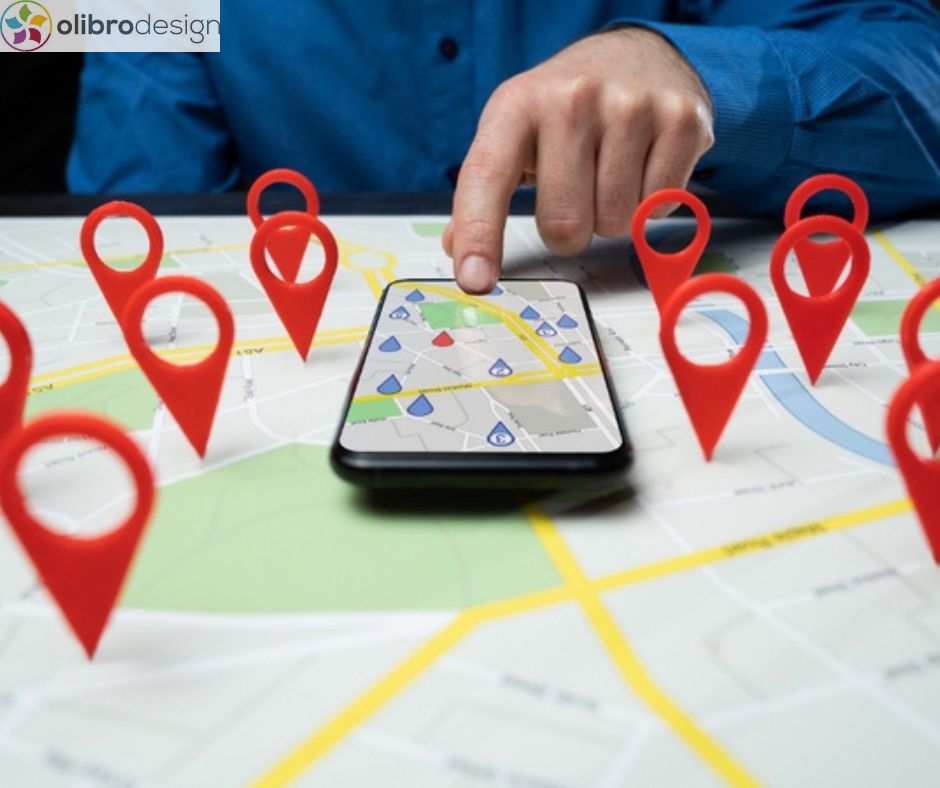
Local service businesses actually benefit more than most. When your Google Business Profile shows up in a local pack with your phone number, hours, and reviews, that’s a conversion opportunity that doesn’t require a website visit. The customer sees your information, calls, and books. The priority is GBP completeness, review quality, and local citations rather than blog traffic.
What We Got Wrong
Two years ago, we convinced a client to optimize every blog post for featured snippet visibility.
Clear answers in the first paragraph.
FAQ schema on everything.
Bullet points and tables everywhere.
It looked great on paper. Traffic dropped 25% over six months. The assumption was that ranking guaranteed traffic, an assumption zero-click searches have steadily dismantled.
The mistake was that we made it too easy for users to get their answer and leave. We optimized for AI extraction instead of user engagement. The content became sterile, formulaic, and forgettable. It ranked well and got pulled into snippets, but nobody had a reason to stay on the page or remember the brand behind it.
Some content should deliberately avoid zero-click optimization. Long-form storytelling, opinion pieces, and personal experience should be written to engage and persuade, not to be parsed by machines. The best content strategy uses both.
Informational content optimized for zero-click visibility builds authority. Thought leadership designed to be read fully builds trust and differentiation. You need both working together, and knowing which piece of content serves which purpose is half the strategy.
Content That Still Drives Traffic
Despite everything we’ve covered, certain content formats still generate website visits because they can’t be fully consumed in a snippet or AI response. Even within an environment dominated by zero-click searches, depth and authority still create leverage.
Detailed comparison guides remain strong performers because AI struggles to replicate the nuance of a full product comparison with charts, screenshots, and feature-by-feature breakdowns. A surface-level “Product A vs. Product B” summary might satisfy a casual question, but anyone making a real purchasing decision wants to see the details side by side on a single page. That depth is hard to synthesize into an AI-generated answer without losing the context that makes it useful.
Hyper-local content holds up for a similar reason. AI models are trained on broad datasets and can’t reliably personalize geographic recommendations at the neighborhood level. Content like “HVAC companies in [specific neighborhood]” or “best coworking spaces in [city district]” requires local knowledge that broad models simply don’t have. This is especially relevant for our local service clients, where geographic specificity is a real competitive advantage.
Interactive tools and calculators are essentially immune to AI extraction. ROI calculators, cost estimators, and assessment quizzes require user input and deliver personalized outputs. There’s no way to replicate that experience in a search result or a chatbot response. If you can build a tool that solves a specific problem for your audience, it becomes a traffic asset that zero-click trends can’t touch.
In-depth case studies still pull readers in because the value is in the narrative, not the headline. AI can grab surface details from a case study, but it can’t replicate the story of how a project went sideways and what the team did to fix it. That kind of content builds trust in a way that a summarized bullet point never will.
The New Playbook
The biggest mindset shift: some of your content will never drive direct traffic, and that’s okay.
When you publish a guide to “What is Email Marketing,” you’re probably not getting clicks from that keyword anymore. AI will extract your definition and use it to answer questions. But thousands of people will see your brand name attached to that answer. That’s not failure. That’s awareness at scale.
Your job is to make sure that when those people are ready to hire someone, your brand is the one they remember. Build that through consistency, quality, and visibility across multiple touchpoints, not just one blog post that ranks for one keyword.
The businesses winning right now aren’t fighting AI or gaming the system. They understand that SEO in 2026 is about omnipresence, not just rankings. It’s about being the name that shows up in AI Overviews, featured snippets, knowledge panels, and direct searches. But omnipresence only works if what people see is worth remembering. Showing up everywhere with generic, forgettable content is just noise. Showing up everywhere with genuine expertise is how you become the default choice.
That’s the new playbook. The question is whether your content strategy is built for it.
Frequently Asked Questions
What exactly is a zero-click search?
A zero-click search is when someone gets their answer directly from the search results page without clicking through to any website. This includes featured snippets, AI Overviews, knowledge panels, local pack results, and direct answers.
Can I block AI from using my content?
Technically, yes. You can use robots.txt to block crawlers like GPTBot or Google-Extended. But doing so prevents your content from being referenced at all. You’d be invisible in AI search. For most businesses, the better play is to become the source AI relies on, not to hide from it.
Does schema markup help with zero-click optimization?
Yes. Schema markup helps search engines and AI understand your content’s structure, making it easier to extract and display. FAQ schema, HowTo schema, Article schema with author information, and LocalBusiness schema all increase your chances of appearing in enhanced results.
What’s the best content format for balancing visibility and traffic?
Use a layered approach: provide a clear, direct answer to the primary question in the first 150 to 200 words (optimized for AI extraction), then add substantial depth below that requires a visit to your site. Calculators, comparison tools, detailed case studies, and proprietary data.
Is content creation still worth the investment if AI just extracts the information?
Yes, but your goals need to evolve. Content creation in 2026 is about building omnipresence and authority, not just driving traffic. Every piece of quality content that gets cited by AI is free advertising for your brand at a scale that would be impossible to buy.
If your content strategy is still optimized for clicks instead of omnipresence, you’re playing yesterday’s game.
If you want to build a strategy that positions your brand as the source AI systems reference — and turns that visibility into real consultations.